Dry salting vs. wet salting
Preserving in salt is one of the oldest curing methods: there is evidence of it from Ancient Egypt and China, and salt even became a currency in many societies.
Today there are two main techniques for curing fish: wet salting and dry salting. Here we explain the differences and why it's worth knowing them.
Wet salting is typical of lower-quality products: brine is injected into the fish or the fish is immersed in it. The weight increases, and so does the price (you pay for water at the price of fish). It's faster but preserves less well, flavours are diluted and textures less defined.
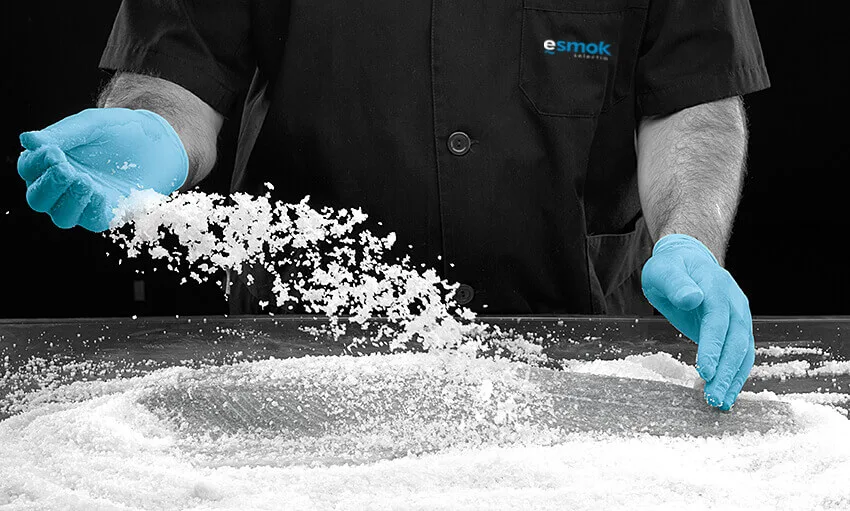
Dry sea-salt curing is reserved for high-quality salted and smoked fish. The fresh loin is covered with layers of salt: the fish slowly absorbs it while releasing excess moisture. The cure is gradual and delicate, concentrating flavour, creating exquisite textures and lasting longer.
At e-smok we cure exclusively with dry sea salt, by hand, so as not to damage the fibres of the loins. This guarantees the highest standards of quality, flavour, texture and shelf life.